B1 · Capitolul 1 din 12
Friday — Bad News
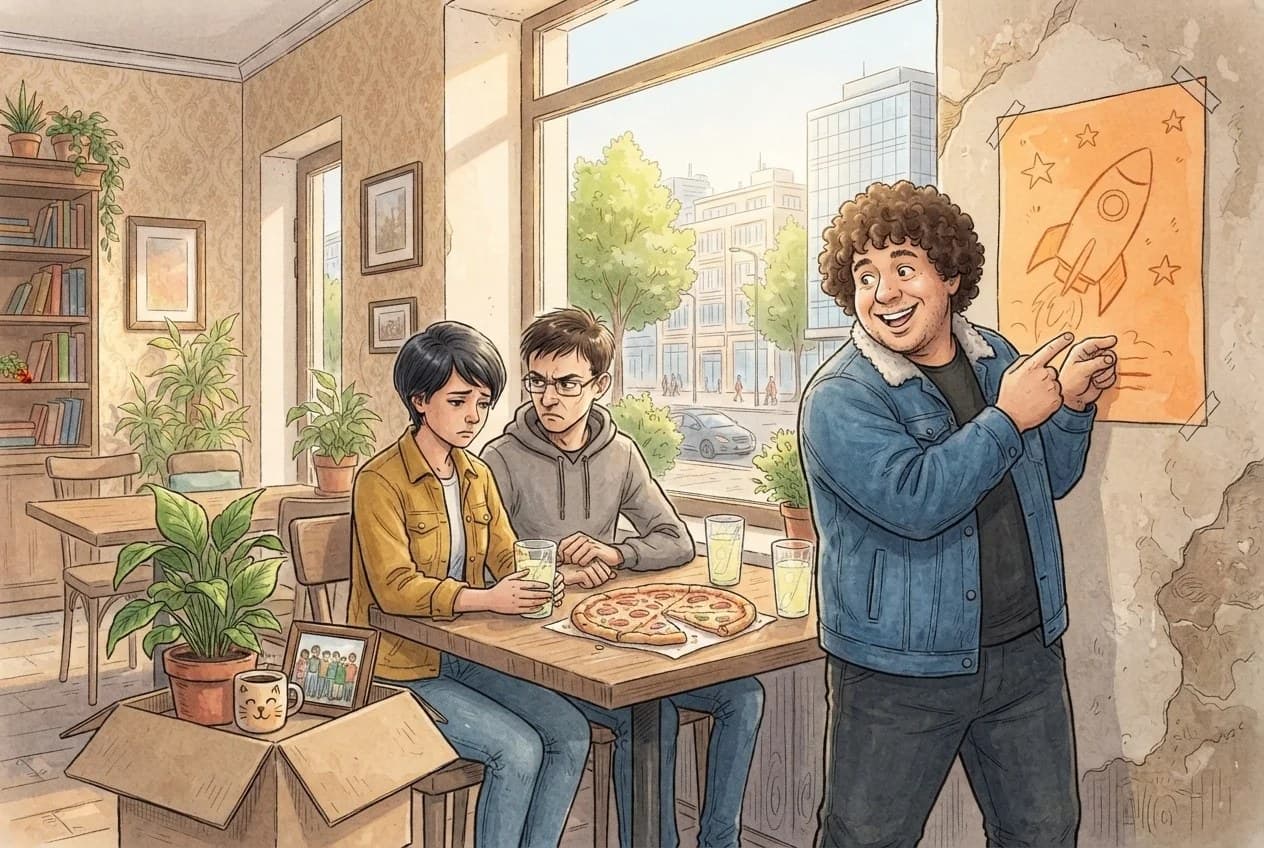
At half past four on a Friday afternoon in April, Cristina Bîrcă was called into the office of her manager at the bank.
She had worked at the bank for four years. She was twenty-seven, with short dark hair, a serious face and a laugh that surprised people because it was so loud. She worked in the marketing department. She wrote the texts for the bank’s adverts, made the posters for the branches and answered the angry comments on the bank’s Facebook page. She was good at her job. Everybody said so.
Her manager, Mr. Rotari, did not look at her when she came in. He looked at his computer.
“Sit down, Cristina,” he said. “I’m afraid I have some bad news.”
The bank was changing. A big bank from abroad had bought it, and the new owners wanted to save money. The marketing department of eleven people was going to become a marketing department of four people. The new owners wanted to do most of the marketing from their head office in Vienna.
“I’m very sorry,” said Mr. Rotari. “It’s not about your work. Your work is excellent. But you are one of the people we have to let go.”
Cristina was laid off at twenty to five. At five o’clock she was standing in the street with a cardboard box in her arms. Inside the box there was a plant, a coffee cup with a cat on it, a photo of her parents and a letter that said she would get two months’ salary.
She stood on the pavement for a long time. People walked past her. A trolleybus went by. The sun was shining, which seemed unfair.
Then she took out her phone and wrote in a group chat called The Three Musketeers:
I lost my job. Café Andy’s, the one on Pușkin Street. Now. Please.
The Three Musketeers were Cristina and her two oldest friends. They had been in the same class at school, from the first year to the last, and they had stayed friends for ten years after that, which, Cristina sometimes thought, was more difficult than staying married.
Dorin Ursu arrived first. He was twenty-eight, thin, with glasses and a grey hoodie that he had probably worn every day since university. He was a programmer at a big IT company that wrote software for clients in Germany and America. He earned good money and was bored to death.
“They fired you?” he said, sitting down. “Those idiots. You were the only person at that bank who could write a sentence.”
Ion Grecu arrived ten minutes later, a little out of breath. He was big and broad, with curly hair and a smile that never really left his face. He worked as a driver for a furniture shop and drove an old white van that he loved like a member of his family. He gave Cristina a hug so strong that her plant almost fell out of the box.
“Right,” said Ion. “Tell us everything. Then we eat. Then we decide what to do.”
She told them everything. They ordered pizza and three lemonades. Dorin said a lot of bad words about banks. Ion said that it was the bank’s loss and that she would find a better job by next week.
“I don’t want another job like that one,” said Cristina suddenly. She was surprised to hear herself say it. “I spent four years making posters for other people’s ideas. Bank cards. Credit. Loans. I never believed in any of it. I want to do something real. Something of my own.”
“Like what?” asked Dorin.
“I don’t know. That’s the problem.” She laughed, but it was not a happy laugh. “I have two months’ salary and my savings. About three thousand euros. That’s all.”
Ion was looking at the wall behind her. On the wall of the café there was a big orange poster. He stood up, went to it and read it aloud.
“Launch Week Chișinău. Can you start a business in seven days? Show us a real product with real paying customers by Monday the 21st at 10 a.m. First prize: a grant of ten thousand euros and six months of free office space at Startup Hub Chișinău.”
He turned round. “Monday the 21st,” he said. “That’s not this Monday. That’s next Monday.”
“So?” said Dorin.
“So that’s ten days from now.” Ion read on. “To take part, teams of two to four people must apply online before Monday the 14th at 9 a.m. From that moment, you have exactly one week.” He looked at his friends. “This Monday, nine o’clock. That’s the deadline to apply. Then one week to build a business.”
“A business in a week?” Dorin laughed. “That’s impossible. Apple took years. Amazon took years.”
“Amazon started in a garage,” said Ion. “I have a van. A van is better than a garage. It moves.”
Cristina did not laugh. She was looking at the poster too. Real product. Real paying customers. Ten thousand euros. Six months of free office space.
“It’s a competition,” she said slowly. “Last year there were forty teams. I remember — the bank was one of the sponsors. I made the banner for the stage.”
“So you know what they want,” said Ion.
“They want a startup,” said Cristina. “A small new company with a big idea. Something that can grow.” She looked at Dorin. “Somebody who can build a website in a day.” She looked at Ion. “Somebody with a van and the best smile in Moldova.” Then she looked down at her cardboard box. “And somebody who has a lot of free time from Monday.”
There was a long silence. A waiter took away their plates.
“We don’t have an idea,” said Dorin at last. “That’s the small problem. We don’t have one single idea.”
“Then we find one,” said Cristina. “We have the whole weekend. Tomorrow at ten, at my flat. Bring your brains.”
Ion grinned and raised his glass of lemonade. “One for all,” he said.
Dorin sighed and raised his glass too. “And all for one,” he said. “But if this is a disaster, I want it on the record that I said it was impossible.”
“It’s on the record,” said Cristina. And for the first time that afternoon, she laughed her loud, surprising laugh.
Verifică-te
- Why does Cristina lose her job?
- What must teams show by Monday the 21st?